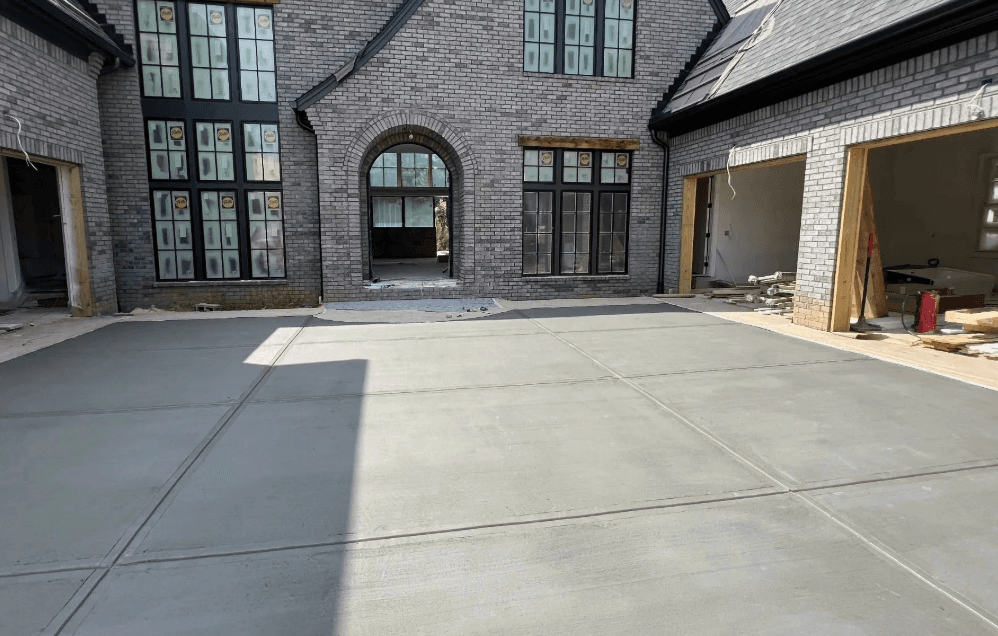
Foundations & Slabs
The most important pour on any project — engineered for North Texas clay soil.
Foundations & Slabs in the Dallas Area
North Texas sits on expansive clay soil that swells when wet and shrinks when dry. That constant movement is hard on concrete, which is why a foundation or slab here has to be engineered for our conditions — not just poured and hoped for. Concrete Pros Of Dallas builds foundations and slabs designed from the soil up to stay flat and stable for the long haul.
For home slabs and large pads we often recommend post-tension construction. Post-tension slabs use steel cables threaded through the concrete and tightened after the pour, putting the slab under compression so it resists the cracking and movement that clay soil causes. We also pour conventional rebar-reinforced slabs for garages, shops, room additions, and outbuildings.
Every foundation we build starts with proper soil evaluation, grading, and drainage, and finishes with correct curing — the steps that determine whether a slab performs for decades or fails early. We build to code and stand behind our work.
Benefits of Our Foundations & Slabs
- Engineered specifically for expansive Texas clay soil
- Post-tension options for superior crack resistance
- Proper drainage and grading to protect the slab
- Conventional reinforced slabs for garages and shops
- Code-compliant work with inspections coordinated
- Backed by a workmanship warranty for peace of mind
Our Process
A real sequence, done in order — every step matters to the finished result.
- 1
Soil Test & Engineering
We evaluate the soil and work from an engineered design so the foundation is sized correctly for your site and load.
- 2
Excavation
We clear, cut, and grade the pad, establishing the drainage and elevations the design calls for.
- 3
Grade Beam / Form
We dig and form grade beams and the slab perimeter to the engineered layout.
- 4
Rebar & PT Cables
We install rebar and, for post-tension slabs, route and position the steel tendons throughout the pad.
- 5
Pour
We place and finish the concrete, then stress the post-tension cables once the slab has gained strength.
- 6
Cure
We cure the slab correctly to reach full design strength — the step that determines long-term performance.
Frequently Asked Questions
Post-tension vs. conventional — which do I need?
Post-tension slabs handle expansive clay movement better and are common for home foundations and large pads in North Texas. Conventional rebar slabs are well-suited to garages, shops, and additions. Your engineered plan will specify the right approach.
How long does a slab take to cure?
Concrete is walkable in a day or two and reaches roughly 70% of strength in about a week, with full design strength at around 28 days. We schedule follow-on work accordingly.
How thick should a garage or shop slab be?
Garage slabs are typically 4 inches; shop floors and slabs that carry heavier equipment or vehicles are poured thicker with added reinforcement based on the load.
Do foundation projects need permits?
Yes — foundations and slabs require permits and inspections in DFW municipalities. We coordinate the permitting and inspection process as part of the job.
Related Services
Ready to Start Your Concrete Project?
Get a free estimate today — no obligation.